
Best Treatment for Whiplash Recovery
The morning after a car accident, whiplash often feels worse than the collision itself. What seemed like minor neck soreness can turn into stiffness, headaches, shoulder tension, dizziness, and difficulty focusing at work or driving comfortably. When patients ask about the best treatment for whiplash recovery, the most accurate answer is not one single therapy. It is a timely, personalised treatment plan that reduces pain, restores movement, and helps the neck recover without becoming chronically irritated.
What is the best treatment for whiplash recovery?
Whiplash is a neck injury caused by a rapid back-and-forth motion of the head, most often during a motor vehicle accident. That sudden force can strain muscles, irritate joints, overload ligaments, and affect surrounding tissues in the neck, upper back, and shoulders. Some people recover in a few weeks, while others deal with symptoms for months, especially if treatment is delayed or the injury is more complex.
So what is the best treatment for whiplash recovery in practice? Early assessment, guided movement, and coordinated hands-on care are usually more effective than simply waiting it out. Complete rest for too long can actually slow progress. Most patients do better when treatment focuses on pain control in the short term and function in the longer term.
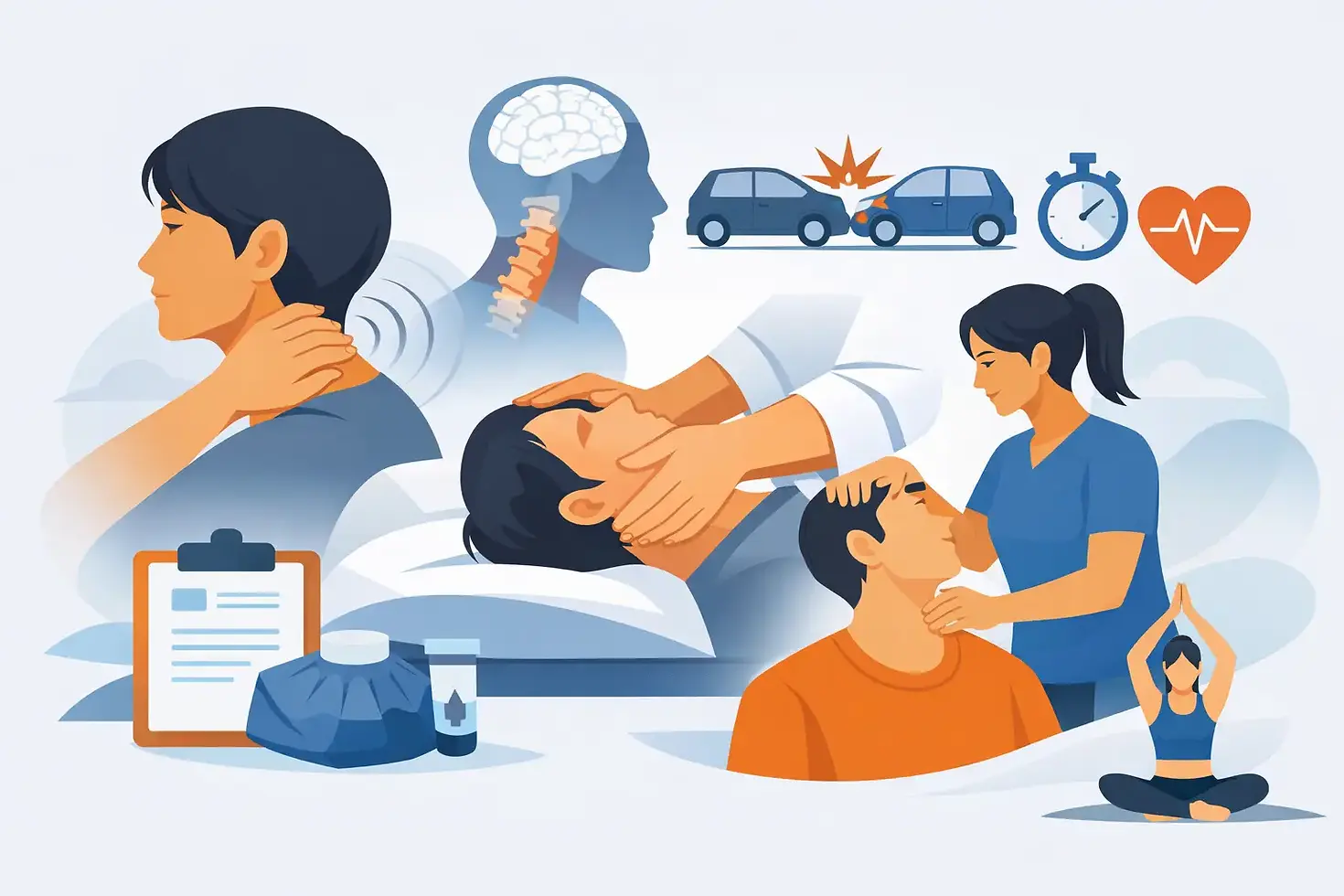
A good plan often includes physiotherapy, registered massage therapy, home exercises, and in some cases acupuncture or osteopathic treatment. The exact mix depends on symptom severity, how soon care begins, and whether there are related issues such as concussion symptoms, jaw pain, nerve irritation, or low back strain after the accident.
Why whiplash needs more than pain relief
Pain is usually the first thing people notice, but it is not the only issue. Whiplash can affect the way the neck moves, how the shoulders compensate, and even how the nervous system responds to stress and guarding. That is why short-term symptom relief matters, but it is not enough on its own.
For example, massage may reduce muscle tension and help you feel immediate relief. That can be very useful, especially when the upper traps, levator scapulae, and surrounding tissues become tight and protective. But if neck mobility, postural control, and strength are not addressed as well, symptoms can return as soon as you sit at a desk, drive, lift groceries, or try to get back to training.
The best care plan usually combines therapies rather than relying on one approach forever. The goal is to help tissues settle down, then gradually restore normal movement and confidence.
Best treatment for whiplash recovery by stage
In the first few days after injury, the priority is assessment and calming down irritated tissues. That may include a clinical evaluation to rule out more serious injury, education on what symptoms to monitor, and gentle treatment to manage pain and stiffness. Ice or heat may help depending on the person, and simple range-of-motion exercises are often introduced earlier than many patients expect.
During the next phase, treatment usually becomes more active. Physiotherapy can help improve neck mobility, retrain posture, and build strength in the deep neck flexors and upper back. This matters because many people with whiplash start moving differently without realizing it. They guard the neck, elevate the shoulders, or avoid turning their head fully, which can prolong discomfort.
Hands-on treatment also has an important role here. Registered massage therapy can reduce muscle guarding, improve circulation, and make movement exercises more tolerable. Osteopathic treatment may help address restrictions through the neck, thoracic spine, and rib cage, especially when stiffness feels widespread rather than limited to one spot.
If headaches, stress-related muscle tension, or persistent pain are part of the picture, acupuncture may also be useful. For some patients, it helps reduce pain sensitivity and supports relaxation when the nervous system is staying on high alert after the accident.
Later in recovery, the focus shifts again. At that stage, the best treatment is the one that helps you return to normal life without flare-ups. That may mean more strengthening, better workstation habits, gradual return to sport, or strategies for longer drives and commutes.
Which treatments help most?
Physiotherapy is often central to whiplash recovery because it addresses both symptoms and function. A physiotherapist can assess joint mobility, muscle weakness, postural habits, and movement patterns, then build a plan that progresses with your recovery. This tends to be especially valuable for patients who need measurable improvement, not just temporary relief.
Registered massage therapy is helpful when pain, stiffness, and muscle guarding are limiting movement. It can make daily activities easier and often complements exercise-based rehab very well. The trade-off is that massage alone may not be enough if the injury has also affected motor control, balance, or endurance.
Acupuncture can be a good adjunct when pain is persistent, headaches are frequent, or the body is stuck in a cycle of tension and sensitivity. It is not a replacement for active rehab, but it can make rehab easier to tolerate.
Osteopathy may suit patients whose symptoms feel interconnected across the neck, upper back, jaw, or ribs. Some people respond well to this broader manual approach, particularly when breathing feels restricted or movement patterns seem globally off after impact.
Medication can reduce short-term pain, but it rarely solves the problem by itself. It may be appropriate in some cases, especially early on, though patients generally recover better when medication is paired with guided treatment and gradual activity.
When recovery takes longer than expected
Not every whiplash injury follows a simple timeline. Some patients improve steadily in two to six weeks. Others still have headaches, neck pain, dizziness, sleep disruption, or concentration issues well beyond that point. A slower recovery does not always mean severe damage, but it does mean the treatment plan may need to be adjusted.
Several factors can complicate recovery. Delayed treatment, high pain levels early on, previous neck injuries, poor sleep, stress, and concussion-related symptoms can all play a role. Work demands matter too. If you spend long hours at a computer, drive regularly across Vancouver, or do physical work that loads the neck and shoulders, symptoms may persist unless your rehab accounts for those demands.
This is where a multidisciplinary approach can be especially valuable. Rather than treating each symptom in isolation, coordinated care can address pain, mobility, strength, and daily function together. At a clinic such as Pro Wellness Massage Therapy, that can mean combining physiotherapy with massage therapy, acupuncture, or osteopathy based on how your symptoms present and how your body is responding.
What patients can do at home
Home care matters, but it should be realistic. Most patients do not need an elaborate recovery routine. They do need consistency.
Gentle neck movement, good sleep support, short walking sessions, and a simple exercise program are often more useful than aggressive stretching or long periods of rest. Many people make the mistake of either doing too little or doing too much too soon. Both can prolong irritation.
If an exercise sharply increases symptoms, that is a sign to modify it, not necessarily stop all movement. On the other hand, if your neck feels better only while you are resting and worse every time you return to normal tasks, your rehab likely needs better progression.
Workstation setup, driving posture, and phone habits also matter more than patients expect. Repeated forward-head posture and shoulder tension can keep symptoms active even after the injured tissues have started healing.
When to seek care right away
Whiplash symptoms should always be taken seriously after a car accident, even if they appear later. Prompt assessment is especially important if pain is severe, numbness or tingling is present, you have significant dizziness, or headaches are worsening. The same applies if you cannot turn your head comfortably, your sleep is being disrupted, or symptoms are making it difficult to work or drive safely.
For ICBC-related injuries, early documentation and treatment also help create a clearer care pathway. That can reduce delays and make it easier to begin the rehabilitation process while symptoms are still manageable.
The best treatment for whiplash recovery is the one that matches the injury in front of you, starts early, and evolves as you improve. For some patients, that means a short course of hands-on care and exercise. For others, it means more structured rehabilitation with multiple practitioners working together. Either way, the goal is the same: reduce pain, restore movement, and help you get back to daily life with confidence instead of compensation.
If your neck still feels stiff, reactive, or unreliable after an accident, it is worth getting it assessed properly. Recovery tends to go better when care is both timely and specific.


Comments