
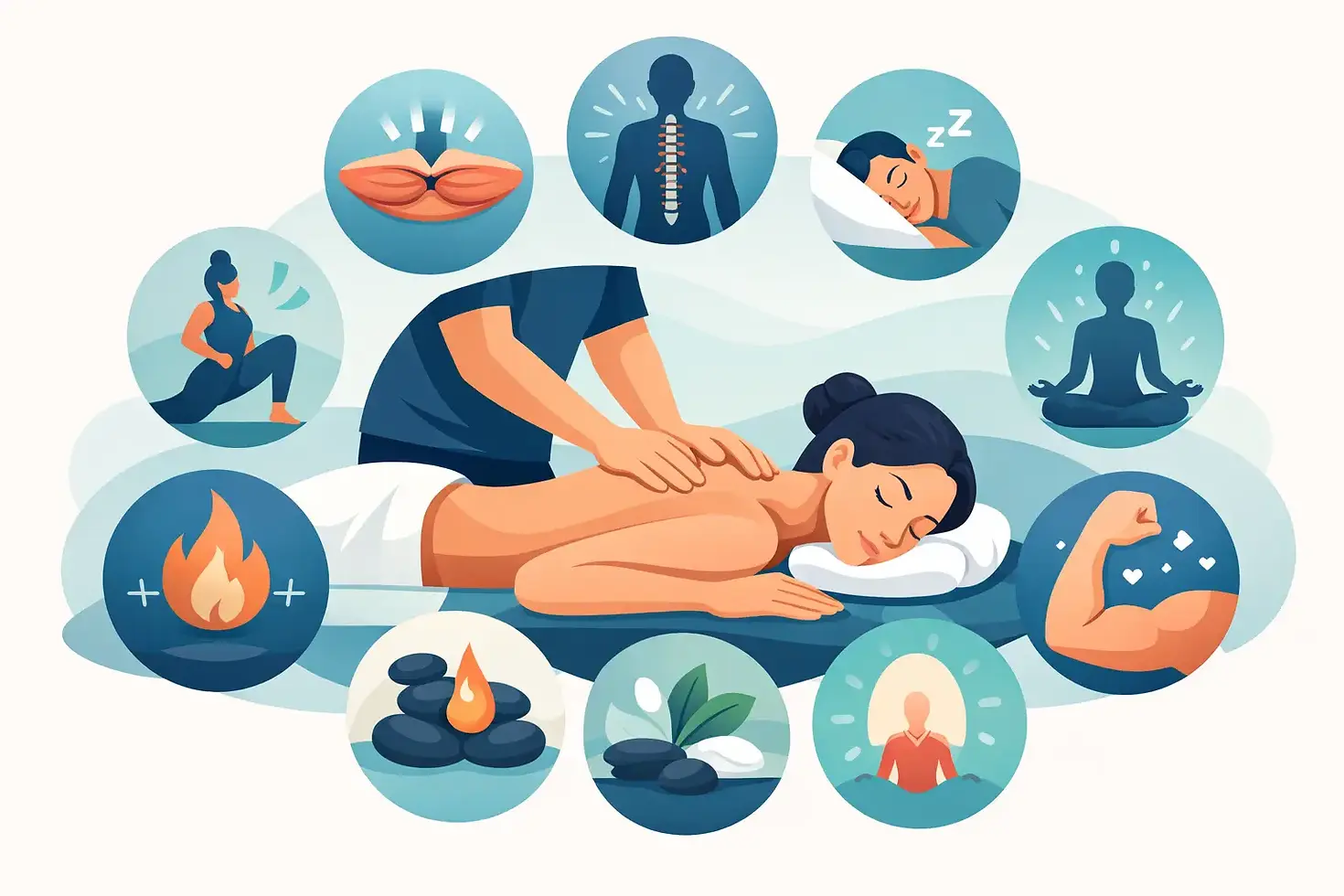
9 Deep Tissue Massage Benefits That Matter
That tight band between your shoulder blades, the low back that stiffens after a commute, the hamstring that never quite settles after training - these are the problems that often bring people in asking about deep tissue massage benefits. For many adults in Vancouver, the appeal is simple: they want treatment that feels purposeful, not generic, and they want to know whether deeper work can actually help them move and feel better.
Deep tissue massage is a focused manual therapy approach used to address persistent tension, restricted movement, and tissue overload. It is not just a harder version of relaxation massage. Done well, it involves assessing the body, identifying the structures contributing to pain or dysfunction, and applying techniques that match the person, the condition, and the stage of recovery. For some clients, that means firm pressure into overactive muscle groups. For others, it means slower, more precise work that improves tolerance without aggravating symptoms.
What deep tissue massage actually targets
When people hear the term deep tissue, they often picture very intense pressure. In practice, the goal is more specific than that. Treatment usually targets deeper layers of muscle and fascia, along with the patterns of guarding and compensation that build up around injury, overuse, or prolonged postures.
This can be useful for office workers carrying neck and shoulder tension, runners dealing with calf and hip restrictions, tradespeople managing repetitive strain, or patients recovering after a motor vehicle accident. The work is typically directed toward improving tissue quality, reducing sensitivity, and restoring movement where the body has become stiff or protective.
The right pressure is not always the deepest possible pressure. A skilled registered massage therapist will adjust technique based on your health history, pain level, and treatment goals. That matters, because aggressive work on an irritated area can leave you feeling worse instead of better.
Deep tissue massage benefits for pain relief and function
One of the main deep tissue massage benefits is pain reduction, especially when discomfort is linked to muscle tension, trigger points, or overload patterns. Many people describe this as a sense of release in areas that have felt constantly tight or heavy. Common examples include the upper traps, glutes, low back, forearms, and calves.
Pain relief can happen for more than one reason. Manual therapy may help decrease local muscle guarding, improve tolerance to movement, and calm a sensitized area enough for normal activity to feel easier again. In some cases, it also helps people notice where they have been bracing or compensating, which can be an important part of changing the pattern.
That said, results depend on the cause of the pain. If symptoms are coming from a joint issue, nerve irritation, or a more complex injury, massage may still help, but usually works best as one part of a broader treatment plan. This is where coordinated care can make a difference, particularly when massage is combined with physiotherapy, osteopathy, or acupuncture based on clinical need.
Better mobility without forcing the body
Restricted mobility is another reason people seek deeper therapeutic massage. Tight hips, limited neck rotation, stiff thoracic spine movement, and pulling through the legs can all affect how you train, work, and recover.
Deep tissue techniques may help by reducing the resistance created by overactive or shortened muscle groups. When tissue tension eases, it often becomes easier to squat, turn your head, reach overhead, or walk with a more natural stride. This does not mean massage permanently lengthens tissue in a dramatic way. The change is often more about improving how the nervous system and soft tissues respond to movement in the short to medium term.
For lasting gains, massage tends to work best alongside movement-based rehab. If your body returns to the same workstation setup, training load, or compensation pattern without any other changes, improvements may be temporary. A therapist should be honest about that.
Recovery from training and repetitive strain
For active adults, one of the most valued deep tissue massage benefits is support with recovery. Higher training volume, repetitive lifting, long cycling sessions, and repeated desk posture can all create fatigue and tissue irritability that build over time.
Deep tissue work may help reduce the feeling of heaviness and stiffness after demanding physical activity. It can also improve awareness of areas that are taking too much load, which helps guide better exercise choices and recovery habits. This is especially helpful for people who are active but not injured enough to stop, yet clearly not recovering as well as they should.
There is a balance here. Deep tissue massage should support training, not derail it. If you have a race, competition, or hard session coming up, the timing and intensity of treatment matter. Very intense work right before performance is not always the best choice. A good treatment plan considers your schedule, not just the sore area.
Postural tension and work-related discomfort
Many Vancouver professionals spend long hours sitting, commuting, or working on screens. Over time, that can create a familiar pattern: tight chest and neck muscles, upper back stiffness, low back tension, jaw clenching, and headaches linked to muscular strain.
Deep tissue massage can be effective here because it addresses more than the spot that hurts. If your neck is sore, the therapist may also assess the upper back, shoulder girdle, chest, and even arm mechanics. That broader view often leads to better results, because postural discomfort is rarely caused by one isolated muscle.
Relief is often most noticeable when treatment is paired with practical advice. Small changes in workstation setup, breaks from static posture, breathing mechanics, and strengthening exercises can help the effects last longer between appointments.
Deep tissue massage benefits during injury recovery
In the right stage of healing, deep tissue massage can be useful during recovery from strains, sprains, overuse injuries, and some motor vehicle accident-related symptoms. The key phrase is in the right stage. Fresh injuries usually need a measured approach. Tissue that is inflamed, bruised, or highly reactive may not respond well to aggressive pressure.
Later in the recovery process, massage may help address compensatory tension, reduced range of motion, and the guarded movement patterns that often remain after the initial pain has settled. Patients recovering from shoulder injuries, whiplash, hip tightness, or chronic low back strain often benefit when treatment is adapted carefully over time.
At a multidisciplinary clinic such as Pro Wellness Massage Therapy, this kind of care can be especially useful because treatment does not have to happen in isolation. If symptoms point to a need for exercise progression, mobility retraining, or additional assessment, the plan can be adjusted instead of relying on massage alone.
Stress reduction is real, even in clinical care
People usually associate deep tissue work with rehabilitation, but another of the meaningful deep tissue massage benefits is stress reduction. That may sound secondary when someone comes in for pain, yet stress and physical tension often reinforce each other.
When the body stays in a guarded state, muscles remain active even at rest. Sleep can be lighter, breathing may become shallow, and pain can feel more persistent. Effective hands-on treatment can help interrupt that cycle. Clients often leave feeling not only looser, but calmer and less wired.
This benefit should not be dismissed as just relaxation. For some patients, reduced stress improves pain tolerance, supports better sleep, and makes it easier to engage with rehab exercises or daily activity. Clinical treatment and nervous system down-regulation are not separate goals. Often, they support each other.
When deep tissue massage is a good fit - and when it is not
Deep tissue massage can be an excellent choice for chronic muscular tension, movement restrictions, sports-related tightness, repetitive strain, and certain phases of injury recovery. It is often a good fit for people who prefer focused, outcome-driven care and want treatment tailored to a specific issue.
It is not the right approach for every situation. Some people do better with gentler techniques, especially if they are highly pain-sensitive, dealing with acute inflammation, recovering from recent surgery, or living with certain health conditions. Pressure that feels extreme is not proof that treatment is working.
A proper assessment matters. Your therapist should ask about your symptoms, medical history, injury timeline, and goals before deciding how to treat. They should also explain what kind of post-treatment soreness is normal, what is not, and how your plan may change over time.
What to expect after treatment
After a well-matched session, many people notice easier movement, reduced tension, and less discomfort in daily tasks. Mild soreness for a day or two can happen, particularly if the area was already irritated or if it has been a long time since your last treatment. That response should be manageable, not disruptive.
Hydration, light movement, and giving the body time to settle are usually more helpful than doing too much right away. If your therapist has identified a pattern contributing to the problem, they may also recommend stretches, strengthening, or follow-up care with another practitioner.
The most useful way to think about deep tissue massage is not as a quick fix, but as a strategic treatment option. For the right person, at the right time, it can reduce pain, improve mobility, support recovery, and make daily life feel less effortful. The best results usually come when the treatment is individualized, clinically reasoned, and matched to how your body is responding - not to how much pressure you think you should be able to tolerate.
If you have been pushing through stiffness, recurring tension, or an injury that never seems to fully settle, the next step is not to endure more discomfort. It is to get the right assessment and a treatment plan that meets your body where it is now.


Comments